

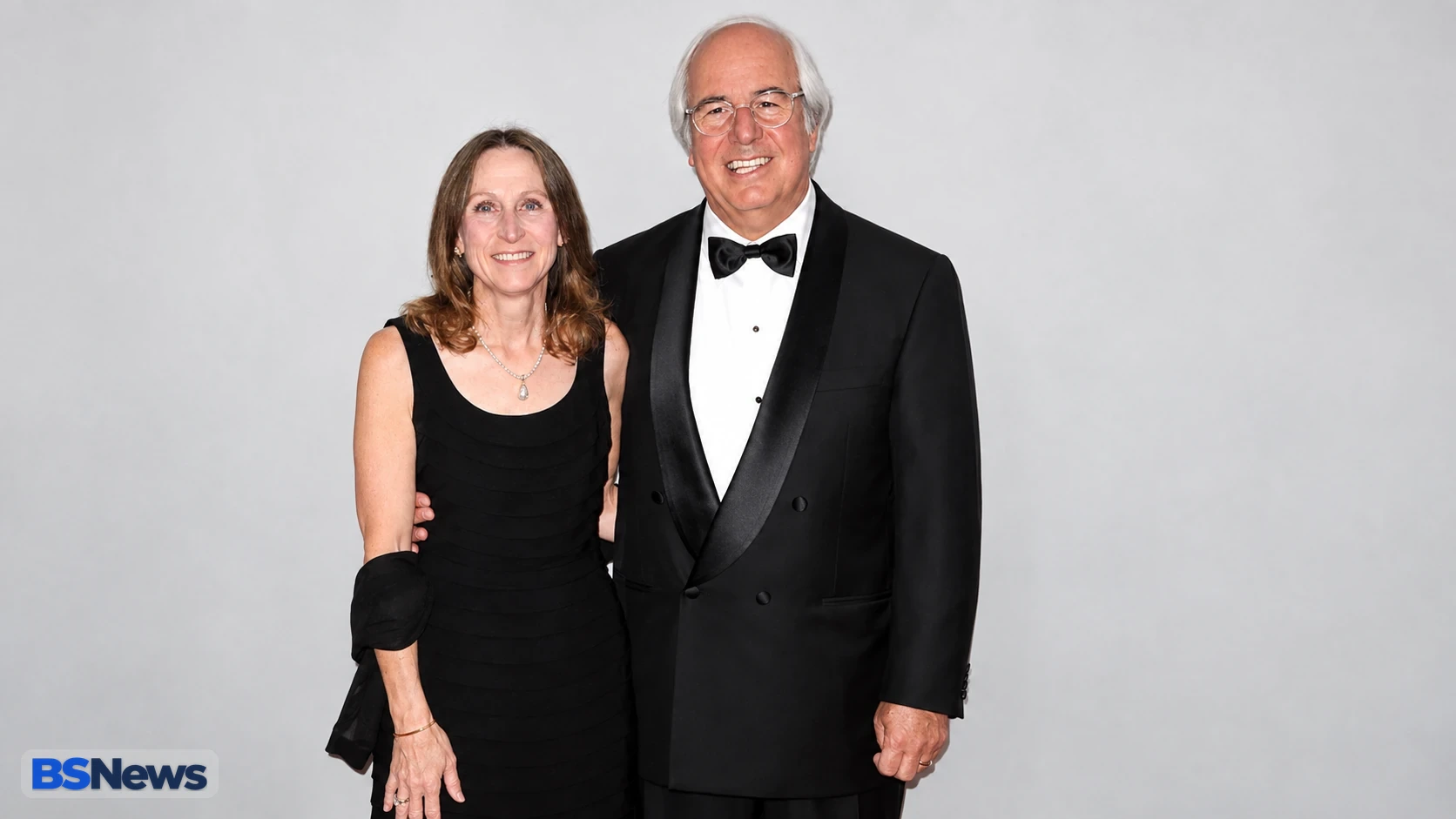
Kelly Abagnale, née Welbes, is the longtime wife of Frank W. Abagnale Jr., whose life later became the basis for Catch Me If You Can. Frank said in a 2016 AARP interview that they would celebrate 40 years of marriage that November, placing their wedding in November 1976.
The latest public evidence reviewed through September 20, 2026 indicates that the marriage continues. A May 2025 public document listed “Frank and Kelly Abagnale” together, while Frank’s official website was indexed in 2026 as describing him as married for more than 49 years. Kelly herself has maintained a much lower public profile than her husband, and many specific details attached to her name online are less securely documented than the core facts of her marriage and family life.
Need to know
- Kelly Abagnale, née Welbes, is Frank Abagnale Jr.’s longtime wife.
- Frank’s own anniversary statement establishes their marriage in November 1976.
- They have three sons: Scott, Chris and Sean.
- Charleston Magazine reported that Kelly was a Houston native with a master’s degree in child psychology.
- Recent public evidence indicates that Kelly and Frank were still publicly associated as a couple through 2025, with supporting first-party evidence continuing into 2026.
Kelly Anne Welbes Abagnale profile summary
| Detail | Verified information |
|---|---|
| Name | Kelly Abagnale, née Welbes |
| Commonly indexed full name | Kelly Anne Welbes Abagnale |
| Known for | Longtime wife of Frank W. Abagnale Jr. |
| Marriage | November 1976 |
| Husband | Frank W. Abagnale Jr. |
| Children | Three sons: Scott, Chris and Sean |
| Background | Houston native, according to Charleston Magazine |
| Education | Reported master’s degree in child psychology |
The form Kelly Anne Welbes Abagnale appears in compiled biographical records, but the strongest family and interview sources usually refer to her as Kelly or Kelly Abagnale. The middle name “Anne” has not been established here through an original birth or marriage record.
Background and education
Kelly’s early life is only lightly documented in reliable public sources. A 2010 Charleston Magazine profile described her as a Houston native who held a master’s degree in child psychology. A later interview with Frank similarly described Kelly as engaged in graduate study in psychology around the time they met.
Those accounts support a graduate-level psychology background, but they do not identify the university that awarded the degree or establish that Kelly later practiced as a licensed psychologist. Claims that give her a more specific professional résumé should therefore be treated with caution.
Her Welbes family connection is better documented. Houston Chronicle family notices identified Kelly as the daughter of Louis and Maxine Welbes and named Frank as her husband. That evidence independently confirms her family name and relationship without relying on celebrity-biography sites centered on Frank.
Meeting Frank Abagnale in Houston
Frank has repeatedly said that he met Kelly in Houston while working on what he described as an undercover assignment. The surrounding details vary slightly from interview to interview, but the main sequence remains consistent.
In the AARP interview, Frank said that after meeting Kelly in Texas he eventually told her who he really was and asked her to marry him. Other interviews place Kelly at the institution connected to the assignment, either working there or completing graduate study.
Frank also recalled taking Kelly to a park and revealing his real identity after she had first known him under another one. He said her parents found the situation difficult. These details are useful because they come from Frank’s own account of the relationship, but they should remain attributed to him rather than presented as independently documented federal history.
He has also consistently described Kelly as a major influence on his adult life. In AARP, he said she “believed in me” and trusted him. Elsewhere, he has called his wife the greatest influence on his decision not to return to crime. That reflects Frank’s interpretation of the relationship; it does not provide direct testimony about Kelly’s own feelings or motivations.
Marriage and family life
The couple married in November 1976. That month and year are supported directly by Frank’s statement in May 2016 that they would mark 40 years of marriage that November.
A more precise date, November 6, 1976, appears in a compiled MyHeritage biographical record and has been repeated by numerous secondary sites. It may be accurate, but the original civil marriage record was not located in the research used for this profile. November 1976 is therefore the strongest formulation.
Kelly and Frank went on to raise three sons: Scott, Chris and Sean Abagnale. Their names were reported by Charleston Magazine, while Frank has repeatedly confirmed that he and his wife had three sons.
Much of their family life unfolded in Tulsa, Oklahoma. In a 2017 public talk, Frank said the family lived in the same Tulsa house for about 25 years. A 2008 obituary for Kelly’s mother also listed “Kelly Abagnale (Frank)” in Tulsa, providing independent support for that part of the family chronology.
Frank later testified before the U.S. Senate that he chose to raise his sons in Oklahoma partly to keep them away from the attention surrounding his notoriety and the later film adaptation of his life. That helps explain the relative scarcity of public material about Kelly and their children without requiring assumptions about her personality or attitude toward publicity.
A family life distinct from the Catch Me If You Can story
Kelly became part of Frank’s life after the period most closely associated with Catch Me If You Can. That distinction is important because readers sometimes look for a direct real-life counterpart to the film’s romantic storyline.
Kelly should not be treated as the real-life version of a movie love interest simply because she later married Frank. The film dramatizes an earlier period and is not a documentary record of Kelly’s life.
The broader source story also requires care. A Los Angeles Times investigation found that several famous claims in Frank’s autobiographical narrative were difficult to verify and noted that the film made additional changes for dramatic purposes. For Kelly’s biography, that means the safest approach is to rely on independently supported family chronology and clearly attributed interviews rather than using the movie as evidence.
Kelly’s significance lies in Frank’s later adult life: marriage, children, a long period of family stability and the role he has said that family played in shaping his choices.
Life in Oklahoma and later public appearances
The Tulsa years appear to have been the longest documented chapter of the couple’s family life. Frank said his sons grew up there over roughly a quarter century, and public family records place Kelly there in the 2000s.
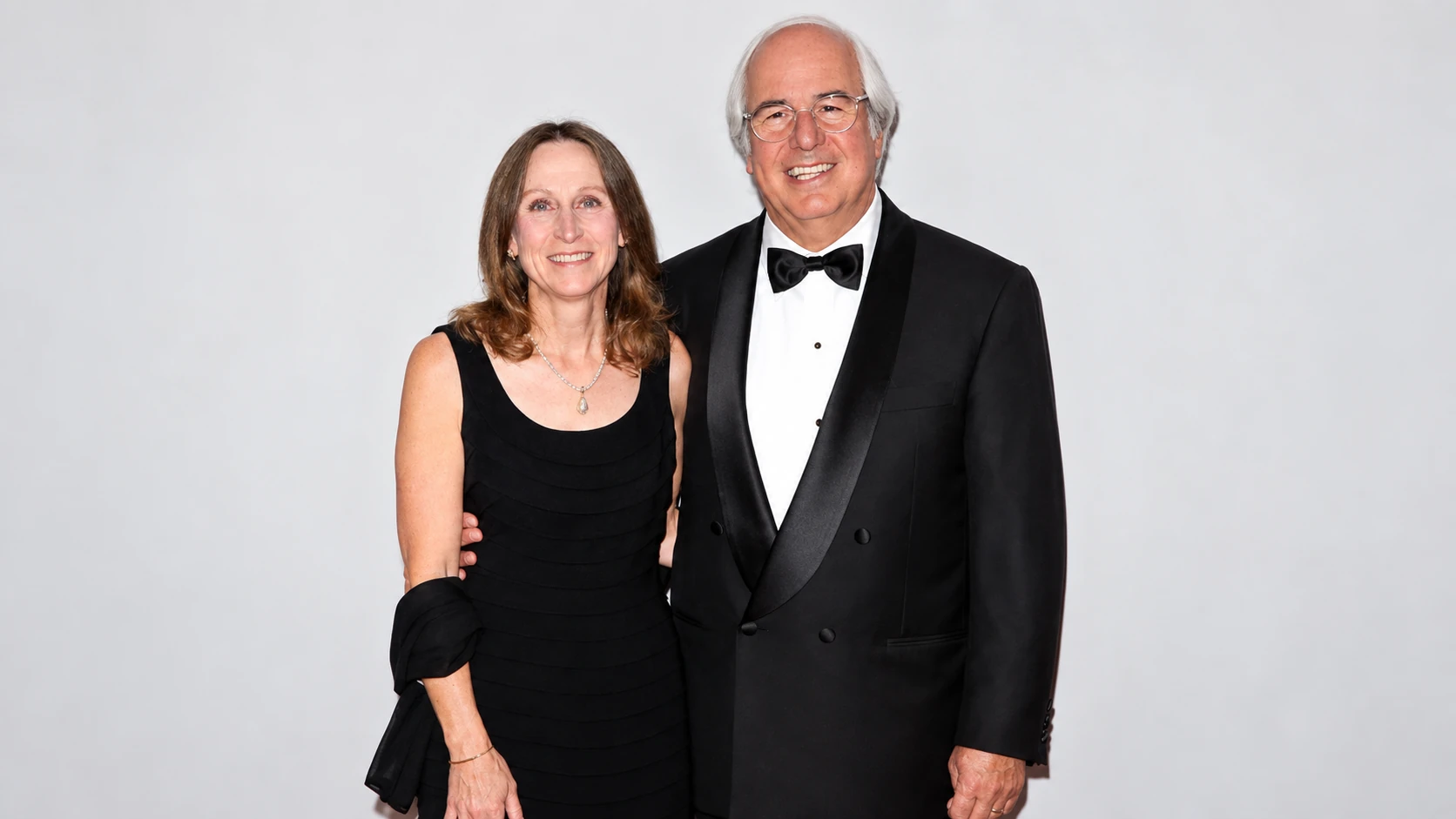
By 2010, Charleston Magazine was reporting a move to the Charleston area. Later coverage placed Frank and Kelly on Daniel Island in 2019, when they were also photographed attending a Greenville Theatre production of Catch Me If You Can. That address-related information is historical rather than proof of where they live in 2026.
Public appearances involving Kelly have been occasional rather than frequent. She appeared with Frank at the Tony Awards in 2011 and at the Greenville Theatre event in 2019. Those appearances support the picture of a long marriage without turning Kelly into a public figure with an independent entertainment career.
Career claims and what the record actually supports
Kelly does not have a well-documented independent public career in the available evidence. Her reported graduate work in psychology is supported by established profile reporting, but a current occupation is not.
That matters because newer web pages have attached much more elaborate careers to her. Claims that Kelly became a business strategist, executive coach, entrepreneur, public speaker or leadership consultant are not supported by the stronger evidence used for this profile.
Similar confusion surrounds the Charleston boutique House of Sage. Some older writing has been interpreted as linking Kelly to the business, but contemporary reporting identified Chris Abagnale with its ownership and operation, while the company’s own history says Chris and Erin Abagnale founded it. Kelly should not be described as the boutique’s founder or owner.
There is likewise no credible basis for a personal net-worth estimate. Frank’s speaking work, books, consulting or other financial activity cannot be converted into a reliable wealth figure for Kelly.
What is known about Kelly today
The most recent fully inspectable independent evidence identified in the research dates to May 4, 2025, when a Charleston Duck Race document listed Frank and Kelly Abagnale together as a GOLD-level sponsor.
That record does not establish every aspect of their private lives, but it is useful recent evidence that they continued to be publicly associated as a couple nearly five decades after marrying.
Frank’s official website was also indexed shortly before September 20, 2026 as describing him as married for more than 49 years. Because the underlying page could not be directly fetched at that time, that wording is best treated as supporting first-party evidence rather than independent civil-status confirmation.
Taken together, the newest material supports the conclusion that the marriage continued into the most recent period covered by the research.
Details that remain uncertain
Several exact-looking facts repeated online should not be treated as settled biography.
An alleged birth date of June 26, 1954 and a Galveston, Texas birthplace appear in multiple derivative profiles, but no authoritative birth record was identified. The stronger Charleston Magazine source describes Kelly simply as a Houston native.
Her exact wedding day is also less certain than the marriage month. November 1976 is directly supported; November 6 comes from a compiled record rather than an original certificate.
Other commonly circulated details—including height, weight, religion, ethnicity, current address, precise occupation and personal net worth—either lack adequate support or are not relevant enough to justify inclusion.
There is also no authenticated substantive interview with Kelly herself in the evidence used for this profile. That makes first-person quotations attributed to her on newer websites especially important to verify before publication.
Conclusion
Kelly Abagnale’s documented public story is narrower than many online biographies suggest. She is Frank Abagnale Jr.’s longtime wife, a member of the Welbes family, the mother of their three sons and a person whom Frank has repeatedly identified as an important influence on the life he built after the period associated with Catch Me If You Can.
The strongest evidence supports a clear relationship chronology, a reported graduate background in psychology and decades of family life centered for many years in Tulsa. Beyond that, the record becomes thinner. For a private person whose name is often surrounded by copied biographical claims, the most accurate profile is one that keeps the verified facts distinct from details that remain unconfirmed.
